
The Navagraha Temples of Tamil Nadu
By MyPalmLeaf Editorial Team About the author The Navagraha Temples of Tamil Nadu Quick answer: The Navagraha temples are a group of nine ancient shrines

Astrology, a celestial science, has been a significant aspect of various cultures, guiding individuals in understanding their destinies and the mysteries of the universe. Two prominent branches of astrology, Vedic and Western, have intrigued scholars and enthusiasts alike, each offering a unique lens through which to view the cosmos and human existence.
This article delves into the origins, philosophies, and differences between Vedic and Western astrology, shedding light on their respective approaches to interpreting the celestial influences on human life.
Vedic astrology, also known as Jyotish (translated as “science of light”), traces its origins to the ancient Vedas, the sacred texts of Hinduism. It is deeply intertwined with the concepts of karma and dharma, offering insights into an individual’s life path, spiritual evolution, and karmic debts.
Vedic astrology emphasizes the interconnectedness of cosmic energies and their impact on one’s destiny.
The foundation of Vedic astrology lies in the sidereal zodiac, which accounts for the actual positions of constellations as observed in the sky.
This branch of astrology also places a strong focus on the lunar mansions (Nakshatras) and planetary periods (Dashas), which are pivotal in understanding timing and life events.
(we have a dedicated blog post on Vedic Astrology here.)
Western astrology has its roots in ancient Babylonian practices, later refined by Greek philosophers like Ptolemy and influenced by Roman and Arab scholars. It primarily focuses on the individual’s psychological patterns, personality traits, and potential. This branch of astrology employs the tropical zodiac, which is based on the seasons rather than the fixed positions of constellations.
Philosophically, Western astrology emphasizes the Sun’s role as the central force in shaping an individual’s identity and ego. The natal chart serves as a tool for self-discovery and personal growth, offering guidance in navigating life’s challenges and opportunities.
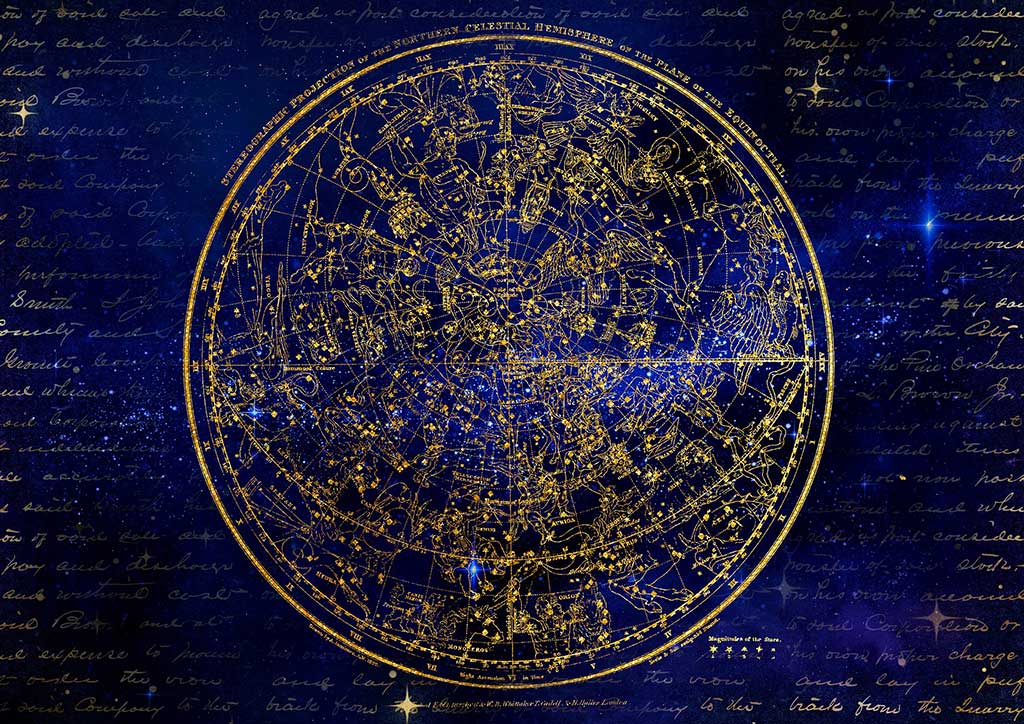
The diversity in house systems between Vedic and Western astrology is noteworthy. Western astrology explores various house systems, such as Placidus, Koch, and Equal Houses, each with its unique calculations. In contrast, Vedic astrology adopts whole sign houses, where each house represents a complete sign.
The visual representation of astrological charts also differs significantly. Western charts are circular, reflecting the dynamic flow of energy, while Vedic charts exhibit a square layout, emphasizing stability and structure.
Vedic astrology further segments the zodiac into 27 Nakshatras or lunar constellations. Each Nakshatra encapsulates specific qualities, energies, and mythological stories, providing profound insights into an individual’s character, purpose, and karmic lessons. These Nakshatras add an additional layer of depth to Vedic astrology, offering spiritual insights that are often not emphasized in Western astrology.
Free · 30 seconds
What is your birth star?
Vedic astrology divides the sky into 27 nakshatras, each 13°20′ wide. The one the Moon stood in when you were born is your birth star.
Over the centuries, both Vedic and Western astrology have undergone transformations, adapting to societal changes and incorporating new knowledge. Contemporary practitioners often explore syncretic approaches, combining elements from both systems to offer holistic insights.
The advent of technology has also played a significant role in astrology’s evolution. Online tools, software, and platforms have made astrological knowledge more accessible, enabling personalized readings and fostering a global community of astrology enthusiasts.
At its core, astrology serves as a profound tool for self-discovery, self-reflection, and personal growth. It invites individuals to explore their inner landscapes, understand their strengths and challenges, and navigate life with wisdom and awareness.
Whether viewed through the lens of Vedic astrology’s karmic focus or Western astrology’s personality-driven insights, the celestial science empowers individuals to live authentically and fulfill their destinies.
While Vedic and Western astrology have distinct methodologies and philosophies, both aim to illuminate the cosmic influences shaping human lives. Integrating insights from both systems can offer a comprehensive understanding of one’s spiritual and psychological journey. For instance, the precision of Vedic astrology’s sidereal approach can complement the psychological depth of Western astrology’s interpretations.
Whether you resonate more with the karmic focus of Vedic astrology or the personality-driven insights of Western astrology, both serve as valuable tools for navigating life’s mysteries. By exploring these two branches of astrology, individuals can gain a deeper connection to the cosmos and a greater understanding of their place within it.
published: 30/09/2023
updated: 28/12/2024
Want the full picture? Get the free Palm Leaf Guide.
Honest answers to every question, plus €10 off your first reading. Straight to your inbox.

By MyPalmLeaf Editorial Team About the author The Navagraha Temples of Tamil Nadu Quick answer: The Navagraha temples are a group of nine ancient shrines

By MyPalmLeaf Editorial Team About the author Muhurat: Choosing Auspicious Timing in Vedic Tradition Quick answer: A muhurat is an auspicious window of time chosen

By MyPalmLeaf Editorial Team About the author Guru Chandal Dosha: Meaning, Effects and Remedies Quick answer: Guru Chandal Dosha is a condition in Vedic astrology


By Stephan OesterreicherFounder of MyPalmLeaf. 10+ years of spiritual practice, meditation, and the Nadi Astrology tradition. About the author In
By Stephan OesterreicherFounder of MyPalmLeaf. 10+ years of spiritual practice, meditation, and the Nadi Astrology tradition. About the author When

By MyPalmLeaf Editorial Team About the author The Navagraha Temples of Tamil Nadu Quick answer: The Navagraha temples are a